
Table of Contents
Introduction
Modal verbs are a fundamental part of English grammar. They help speakers express ability, possibility, permission, obligation, advice, and intention. They shape meaning rather than describe actions. Modal verbs are essential for both daily conversations and professional communication.
Learners often face problems in choosing when to use the modal verbs, which one to use in a particular context, and in framing negative statements and interrogative sentences (questions) involving modal verbs. This blog article explains what modal verbs are, highlights their key features, and provides practical examples from everyday conversations and business contexts.
What are Modal Verbs?
Modal verbs are a class of auxiliary (helping) verbs used alongside the base form of a main verb. They are used to express ideas such as ability, likelihood, necessity, permission, or future intent. Unlike other verbs, modal verbs do not show tense in the usual way and do not change their form according to the subject or number. These are also called modals, modal auxiliaries, or modal auxiliary verbs.
The most commonly used modal verbs in English are can, could, may, might, must, shall, should, will, and would. Other verbs like need, dare, ought to, have to, and used to also share some of the features of modal verbs. Each modal verb carries its own meaning, and the choice of modal verb often reflects the speaker’s attitude, level of certainty, or degree of politeness.
Features of Modal Verbs
Modal verbs share several distinctive grammatical features.
1. Do not Change Form
Modal verbs have only one form. They have no “-ing” (continuous tense) and “-ed” (past tense) forms. You need not add “-s” for third person singular (for example, you cannot say ‘to can’, ‘cans’, ‘canning’, or ‘canned’ when using “can” as a modal verb). They remain the same regardless of the subject, person, or number.
Examples:
- They can drive a car.
- She can drive a car.
- I may go to the party.
- You may go to the party.
- She may go to the party.
2. Followed by the Infinitive of a Verb
Modal verbs are followed by the infinitive (basic form) of another verb without “to”. The exceptions are ought to, have to, and used to.
Examples:
- She can speak Hindi. (‘can’ is the modal verb and ‘speak’ is the infinitive)
- You should finish the report.
- She must pay for the vehicle damage.
- You have to take your medication for two more weeks.
3. Questions
Interrogative sentences (questions) are formed without ‘do’ or ‘does’ in the present tense and ‘did’ in the past.
Examples:
- May I go home early today?
- Shall I open the window for you?
- Can you help me with this presentation?
- Could you tell me the way to the bank?
4. Negative Sentences
Negative sentences are formed with “not” (short form -n’t) and do not use ‘do’, ‘does’, or ‘did’.
Examples:
- She should not be late for the meeting.
- You must not carry heavy items for three weeks.
- We can’t promise you anything, but we’ll do whatever we can.
- Please let me know in advance if you cannot attend the meeting.
5. Passive Voice
In passive sentences, modal verbs are followed by “be” or “have been” and an “-ed” form (past participle) of the verb.
Examples:
- The stadium can be emptied in ten minutes.
- The podcast can be downloaded from this link.
- The names of the winners will be announced tomorrow.
- The report should have been finished yesterday.
Uses of Modal Verbs
The explanation and uses of each modal verb with examples from the real world are given in subsequent paragraphs.
1. Can (Ability, Possibility, Permission)
“Can” is used to indicate physical or mental ability, possession of a specified capability or skill, and possession of a specified power or privilege. It is also used to indicate possibility or probability under specified circumstances and permission to take action or to do something. It is one of the most commonly used modal verbs.
Examples:
- He can carry both the bags.
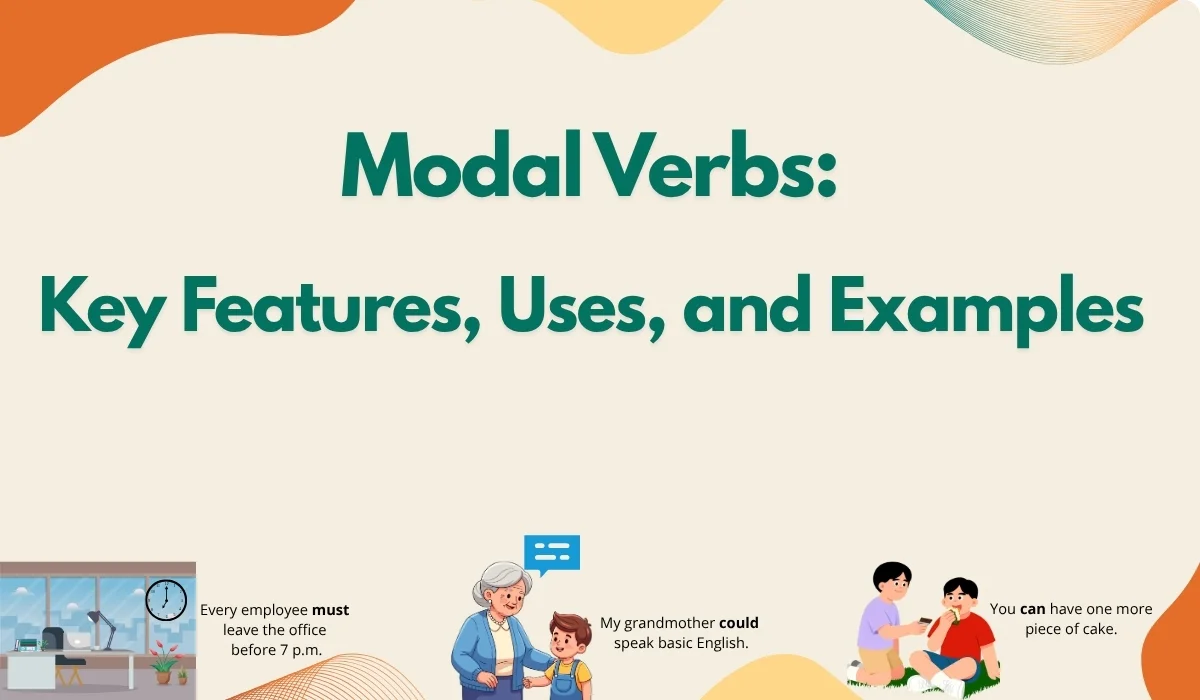
- You can have one more piece of cake.
- Children, you can go outside and play.
- Can you call me tomorrow?
- Can you lend me 200 rupees?
- The president can veto the bills passed by state legislatures.
2. Could (Past Ability, Polite Requests, Possibility)
“Could” is used to indicate ability in the past, permission, possibility, and polite requests. It is one of the most commonly used modal verbs.
Examples:
- My grandmother could speak basic English.
- He could not answer the question.
- I could be wrong.
- Could you come over here?
- I could find the data easily.
- Only women could join this bowling club.
- She said that she could not attend the meeting.
- I could drive a car when I was in my first year of graduation.
- Could you be quiet, please?
3. May (Permission, Formal Possibility)
“May” is used to say that something is possible. It is also used to ask for permission, give permission, or allow someone to do something. It is one of the commonly used modal verbs.
Examples:
- This may be true.
- They may have missed the train.
- May I come in, madam?
- You may come with us if you want.
- May I introduce my friend, Rohan?
- May I make a room reservation for the 10th of next month?
4. Might (Weak Possibility)
“Might” is used to express weak possibility or probability in the present or in the past. It is one of the frequently used modal verbs.

Examples:
- It might rain in our area tomorrow.
- He might retire next year.
- She might get there in time.
- The tablets might have helped him.
- We thought we might be late for the seminar, but we arrived on time.
5. Must (Strong Obligation, Certainty)
“Must” is used to express strong obligation required by customs, moral values, or laws. It is one of the commonly used modal verbs.
Examples:
- Every employee must leave the office before 7 p.m.
- You must inform your reporting manager before taking a leave.
- All construction workers must wear a helmet at all times.
- The committee must do something to stop residents from littering in the apartment.
6. Shall (Suggestion, Offer)
In modern English, the difference between ‘shall’ and ‘will’ has almost disappeared. ‘Shall’ is not used very much at all, especially in US English. However, in British English, ‘shall’ is still used with ‘I’ and ‘we’ in questions or when you want to make a suggestion or an offer. It is also used before a verb in the infinitive to mention that something will take place in the future or to mention an order, requirement, or obligation. It is one of the not so frequently used modal verbs.

Examples:
- Shall I get you a drink?
- Shall I drive the car?
- Shall we order pizza or sandwich?
- Shall I carry the books for you?
- What dress shall I wear to the party?
- We shall arrive in India tomorrow.
- What shall we do on this Sunday?
- This time after three days I shall be in Singapore.
- The penalty shall not exceed one lakh rupees.
7. Should (Advice, Recommendation)
“Should” is used to express duty, obligation, or expectation. It is also used to show what is right, appropriate, etc., especially when criticizing other people’s actions. It is also used for giving or asking for advice. It is one of the commonly used modal verbs.
Examples:
- We should send him a notice.
- They should arrive by 3 p.m.
- You should take your mom to the doctor.
- You should not drink and drive.
- Maybe you should call your father.
- Should I call the teacher and say sorry?
- You should stop worrying about this routine thing.
- She should have been more careful when dealing with the new client.
8. Will (Future Intention, Promise)
“Will” is used to talk about or predict the future. It is used to indicate likelihood, certainty, capacity, ability, or willingness. It is one of the commonly used modal verbs.
Examples:
- The children will appear later.
- She will regret it later.
- Will you send this package by courier?
- Will you help me with this quarterly report?
- He will water the plants while I am away.
- This metal will not corrode in the presence of water.
9. Would (Polite Requests, Hypothetical Situations)
“Would” is used to express desire, intent, or a wish. It is used in polite offers, invitations, or to make polite requests. It is also used to say what you like, love, hate, etc. It is one of the most commonly used modal verbs.

Examples:
- Would you like a burger?
- Would you come with us?
- She would love a strong coffee.
- Would you walk in the garden?
- He would rather come with us.
- She would seem to be getting better.
- Would you have dinner with me on Friday?
- Even a layperson would understand this.
- She said she would meet us in the meeting room.
10. Need (Necessity, Obligation)
This modal verb is used to ask if something is or was not necessary or that only very little is or was necessary. It is used to state the necessity of or the obligation to do something. The negative form is ‘need not’ (or ‘needn’t’) and questions begin with ‘Need …’. It is one of the commonly used modal verbs.
Examples:
- They need not come to the meeting.
- You need not be concerned about this issue.
- If she wants any information, she only need to ask.
- Need you go so soon?
- Need you pay so much for this item?
- They needn’t worry about this news.
- Need I pay the full amount today?
- We need not bother about that matter.
11. Dare (Bold Enough to Do)
It refers to being courageous or bold enough to say something or to do something. In modern English, “dare” more frequently acts as a main verb or an ordinary verb. However, in British English, “dare” is used like a modal auxiliary verb especially in the present tense. It is often used in negative sentences and questions, particularly in more formal and British spoken contexts. It is one of the rarely used modal verbs.
Examples:
- I dare not say anything.
- We dare not tell her the truth.
- No one dare go there at night.
- Nobody dare disturb the manager.
- How dare he go like that when we were talking to him?
- Employees dare not ignore the company’s compliance rules.
Other Modal Verbs
Other verbs like have to, ought to, and used to also share some of the features of modal verbs.
1. Have to (Must do, Need to do)
This modal verb is used to show that you must do or need to do something. We use ‘do’, ‘does’, or ‘did’ with this modal verb, just like other verbs, to frame the questions. It is one of the commonly used modal verbs.
Examples:
- Sorry, I have to leave now.
- You have to complete the report by Friday.
- We have to go home because our children are not well.
- You have to attend the meeting. It’s about the compliance rules.
- Did she have to pay a penalty for late submission of application?
- You have to think logically about the possible consequences.
- I have to admit that the idea of living alone abroad scares me.
2. Ought to (Right Thing to do)
This modal verb is used to say what is the right thing to do. It is used to indicate obligation, duty, advice, or probability. Like other modal verbs, ‘ought to’ does not change to show past tense. Questions beginning with ‘ought to’ are very rare. Most native speakers usually begin the question with ‘Do you think …’. It is one of the not so frequently used modal verbs.
Examples:
- You ought to apologize for being late.
- The train has been cancelled. We ought to book a cab.
- She ought not to have been driving so fast.
- Such things ought not to be allowed in a residential complex.
- Do you think I ought to write an email and say thank you?
- Yes, I think you ought to send a thank you email.
- He ought to finish the project by next week.
- You ought to have been there. We had a lot of fun at the party.
3. Used to (Happened in Past)
This modal verb is used to say or mention that something happened continuously or frequently during a period in the past. To form questions, use ‘did’ and ‘use to’ (not ‘used to’). The negative forms can be ‘didn’t use to’ (informal) or ‘used not to’ (formal) based on the context. It is one of the commonly used modal verbs.
Examples:
- We used to live in Delhi.
- They used to play a lot of cricket.
- Did he use to have short hair?
- He used to smoke but he gave up two years ago.
- We used to go to the public garden every Saturday.
- She used to work for an automobile company.
- He didn’t use to like her when they were at college.
100 Examples of Modal Verbs
Daily Conversations
- Could you open the window?
- She could be at home now.
- Could I borrow your book?
- May I come in, madam?
- It may rain later today.
- You may take my umbrella.
- She may join us for dinner.
- I may call you later.
- I might go for a walk.
- She might be late today.
- We might order food instead.
- He might call this evening.
- It might drizzle tomorrow.
- Children must finish their homework.
- We could watch a movie tonight.
- You must wear a helmet while riding the bike.
- She must be very tired.
- We must leave now.
- He must apologize.
- Can I use your phone for two minutes?
- We can meet after office hours.
- You should get more sleep.
- She should see a doctor.
- We should leave early.
- He should call his parents.
- I should start exercising.
- I will call you tonight.
- She will help you in the initial days.
- Can you come to the office next Saturday?
- Can I submit the application tomorrow?
- Can you remember the famine of 1943?
- He can cook dinner tonight.
- Can you hear that noise?
- She will understand the issue.
- Would you like some tea or coffee?
- We will meet tomorrow.
- I would travel more if I could.
- She can speak four languages.
- I could run faster when I was younger.
- She would help if you asked her.
- Would you mind waiting for some more minutes?
- I would like to join the company on the 20th.
- I have to call my mother tonight.
- They have to finish their homework before dinner.
- I need some rest after the long trip.
- Do you need any help with your bags?
- We need to charge our phones before leaving.
- They need more milk for breakfast tomorrow.
- You need to drink more water during summer.
- She ought to take better care of her health.
- Children ought to respect their teachers.
- We ought to clean our room this weekend.
- Shall we go for a walk after dinner?
- Shall I open the window for you?
- What shall we cook tonight?
- I dare not call Priyanka again.
- Dare you tell her what you think about her?
- She used to live near the beach.
- He used to drink a lot of soft drinks.
- They used to walk to school together.
- Shall we invite our neighbors to the party?
- Shall I carry those bags for you?
- We used to visit our grandparents every summer.
- You have to fasten your seat belts while driving the car.
- We have to buy some groceries before the store closes.
- We ought to leave now if we want to catch the train.
- We used to play cricket every evening when we were in college.
- How dare she walk away when I was giving a lecture?
- I have to wake up early tomorrow for my doctor’s appointment.
Business English
- You may proceed with the proposal.
- The results may vary by region.
- Employees may apply for remote work.
- This change may impact the company’s revenue.
- You may contact HR for more details.
- The client might request revision in design.
- We might face budget constraints.
- The launch might be delayed.
- Sales might improve next quarter.
- All data must be verified.
- We must meet the deadline.
- The contract must be signed by tomorrow.
- We should review the budget.
- You should inform the client.
- The report should be revised.
- We should focus on quality.
- We will deliver on time.
- We can reduce costs by outsourcing some routine tasks.
- Can we schedule a meeting this week?
- I will follow up with the client.
- The company will expand globally.
- We will address this issue.
- Sales will increase next year.
- I would appreciate your feedback.
- We would recommend this solution.
- Would you please confirm the receipt of our invoice?
- The board would approve this plan.
- We would be happy to assist the design team.
- You must submit the report today.
- Employees must follow the company policy.
- We could consider alternative suppliers.
- Could you clarify this point?
- I can complete the task by tomorrow.
- Can you review this document?
- Managers should support their teams.
- This strategy might increase market share.
- The delay could affect delivery schedules.
- This approach could improve efficiency.
- Could we discuss this after the meeting?
- The team can handle this project internally.
- Employees have to submit their reports by Friday.
- We have to improve customer response times this quarter.
- All teams have to attend the safety training session.
- Managers have to approve all travel expenses.
- You have to follow the company’s data security policies.
- We need to finalize the budget this week.
- Service companies need better marketing strategies.
- You need to update the client database regularly.
- Would you like me to help you with this excel report?
- Few departments need additional staff for the new project.
- They need to improve communication with international clients.
- Companies ought to treat employees fairly.
- We ought to review the contract carefully before signing it.
- Managers ought to encourage teamwork in the office.
- The team ought to prepare a backup plan for the presentation.
- Businesses ought to invest in employee training programs.
- Shall we schedule the meeting for Thursday morning?
- The payment shall be completed within seven days.
- Shall I prepare the sales report for the manager?
- The company shall provide technical support to all clients.
- Shall we discuss the proposal during the conference call tomorrow?
- Our company used to operate from a small office.
- She used to work in the marketing department.
- We used to hold meetings in person before remote work became common.
- The factory used to manufacture quartz watches.
- They used to rely on paper records for documentation.
- We dare not challenge the CEO’s decision during the meeting.
- Startups that dare not innovate often do not succeed in competitive markets.
Conclusion
Modal verbs play an important role in sentences for expressing meaning clearly in English. Whether you are making polite requests, giving advice, or discussing business strategy, modal verbs allow you to communicate with clarity and precision. Mastering their usage significantly improves both spoken and written English, especially in professional environments. By practicing modal verbs in real-life contexts, learners can develop confidence and clarity in communication.
FAQs on Modal Verbs
How are modal verbs different from regular verbs?
Unlike regular verbs, modal verbs do not change form. They have no ‘-s’ in the third person singular, no ‘-ing’ form, and no past participle. They are always followed by the base form of a main verb, without ‘to’ (except ‘ought to’ and ‘have to’).
What is the difference between ‘can’ and ‘may’?
‘Can’ is used to express ability (She can speak French) or informal permission, while ‘may’ is used to express formal permission or polite possibility (May I leave early?). However, in everyday speech, the distinction has blurred, and ‘can’ is widely accepted for permission in informal contexts.
What is the difference between ‘must’ and ‘have to’?
Both express obligation, but ‘must’ typically conveys an internal or personal obligation (I must call my mother), while ‘have to’ suggests an external rule or requirement (I have to wear a uniform at work). In negative form, however, they diverge sharply — ‘must not’ means something is forbidden, while ‘don’t have to’ means something is simply not necessary.
What is the difference between ‘will’ and ‘would’?
‘Will’ is used for real or certain future actions and direct offers (I will help you), while ‘would’ is its past form and is used in hypothetical or conditional situations (I would help if I could). ‘Would’ is also commonly used to make requests or statements sound more polite (Would you mind closing the door?).
What is the difference between ‘may’ and ‘might’?
‘May’ suggests a stronger or more real possibility (It may rain today; the clouds look heavy), while ‘might’ suggests a more remote or uncertain possibility (It might rain, but it seems unlikely). In practice, however, the two are often used interchangeably in informal speech.
What is the difference between ‘can’ and ‘could’?
‘Can’ is used to express present or general ability, informal permission, or real possibility (I can swim; Can I sit here?), while ‘could’ is its past form and is used to express past ability (When I was young, I could run very fast). ‘Could’ is also used in polite requests, hypothetical situations, and tentative suggestions, making it softer and less direct than ‘can’ (‘Could you help me?’ sounds more polite than ‘Can you help me?’).
What is the difference between ‘must’ and ‘ought to’?
‘Must’ expresses a strong personal conviction or firm obligation, whether self-imposed or authoritative (You must submit the form by Friday; I must do better), while ‘ought to’ expresses a softer moral duty or what is generally considered the right or expected course of action (You ought to apologise to her). In practice, ‘must’ feels more urgent and forceful, whereas ‘ought to’ carries a tone of gentle moral expectation, and unlike ‘must’, ‘ought to’ retains the ‘to’ before the main verb.
Additional Resources
Did you find this article on modal verbs helpful? Please share it with your friends who are learning English!
For more grammar tips, explore our other blog articles on: