
Table of Contents
Introduction
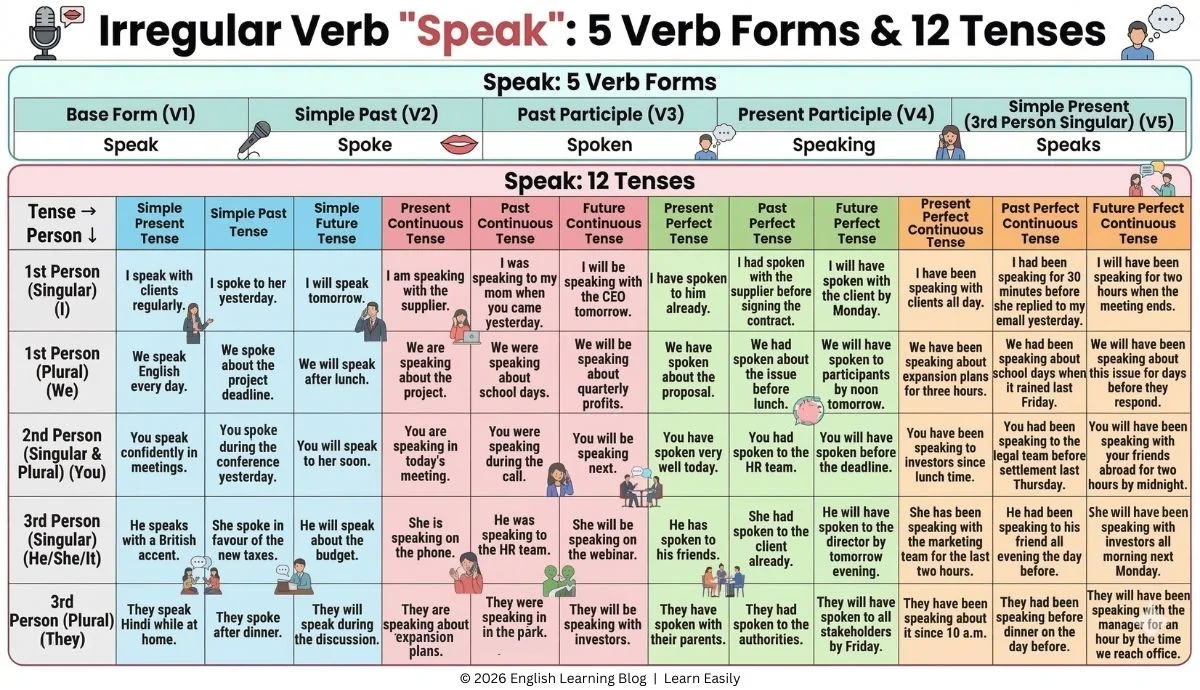
English Grammar infographics present information on important grammar topics and concepts in a concise and visual format. They help learners quickly understand key points without reading lengthy articles. This infographic explains the five verb forms and 12 tenses of the irregular verb “Speak”, using simple language and suitable examples.
These infographics are especially useful for academic and competitive exam preparation, and for daily conversations, making learning both quick and effective.
How to Use this Infographic?
First, look at the entire infographic without reading every detail. This helps your brain understand what topic you are learning before diving into details.
Now, read all the infographic sections carefully and understand the different tenses of the verb “Speak” given under each person and number.
Click on the image for a bigger view.
English Grammar infographics are perfect revision tools. Review them before exams, before classroom lectures, before writing articles, and before presentations. Just 5 minutes of revision can refresh an entire topic.
Use English Grammar infographics for understanding and revision, not memorization alone.
When visuals, examples, and practice come together, reading about English Grammar become easy and enjoyable.
If you want more examples on the irregular verb “Speak” for each of these tenses, read our blog post, Irregular Verb “Speak”.
Speak – Examples
Simple Present Tense
I speak with clients regularly.
We speak English every day.
You speak confidently in meetings.
He speaks with a British accent.
They speak Hindi while at home.
Simple Past Tense
I spoke to her yesterday.
We spoke about the project deadline.
You spoke during the conference yesterday.
She spoke in favor of the new taxes.
They spoke after dinner.
Simple Future Tense
I will speak tomorrow.
We will speak after lunch.
You will speak to her soon.
He will speak about the budget.
They will speak during the discussion.
Present Continuous Tense
I am speaking with the supplier.
We are speaking about the project.
You are speaking in today’s meeting.
She is speaking on the phone.
They are speaking about expansion plans.
Past Continuous Tense
I was speaking to my mom when you came yesterday.
We were speaking about school days.
You were speaking during the call.
He was speaking to the HR team.
They were speaking in the park.
Future Continuous Tense
I will be speaking with the CEO tomorrow.
We will be speaking about quarterly profits.
You will be speaking next.
She will be speaking on the webinar.
They will be speaking with investors.
Present Perfect Tense
I have spoken to him already.
We have spoken about the proposal.
You have spoken very well today.
He has spoken to his friends.
They have spoken with their parents.
Past Perfect Tense
I had spoken with the supplier before signing the contract.
We had spoken about the issue before lunch.
You had spoken to the HR team.
She had spoken to the client already.
They had spoken to the authorities.
Future Perfect Tense
I will have spoken with the client by Monday.
We will have spoken to participants by noon tomorrow.
You will have spoken before the deadline.
He will have spoken to the director by tomorrow evening.
They will have spoken to all stakeholders by Friday.
Present Perfect Continuous Tense
I have been speaking with clients all day.
We have been speaking about expansion plans for three hours.
You have been speaking to investors since lunch time.
She has been speaking with the marketing team for the last two hours.
They have been speaking about it since 10 a.m.
Past Perfect Continuous Tense
I had been speaking for 30 minutes before she replied to my email yesterday.
We had been speaking about school days when it rained last Friday.
You had been speaking to the legal team before settlement last Thursday.
He had been speaking to his friend all evening the day before.
They had been speaking before dinner on the day before.
Future Perfect Continuous Tense
I will have been speaking for two hours when the meeting ends.
We will have been speaking about this issue for days before they respond.
You will have been speaking with your friends abroad for two hours by midnight.
She will have been speaking with investors all morning next Monday.
They will have been speaking with the manager for an hour by the time we reach office.
Infographic
